The Ultimate Guide to Hiring a Shopify Virtual Assistant: Real-World Insights from U.S. Store Owners
I just spent three hours answering the same customer question for the 5th time today,” shared a frustrated Shopify store owner on Reddit. Another asked on Quora: “Can a virtual assistant really help me manage my Shopify store without me losing control?"
If this sounds familiar, you’re not alone. Hundreds of Shopify entrepreneurs across the U.S. feel overwhelmed by endless product uploads, order notifications, and marketing demands. The solution isn’t just hiring help, it’s hiring the right Shopify Virtual Assistant (VA).
In this guide, we’ll answer the most common questions U.S.-based store owners have about Shopify VAs, what they do, how much they cost, and how they can help you scale your business confidently. Plus, we’ll sprinkle in some customer service tips and insights for better customer experience along the way.
Key Takeaways: What You’ll Learn
By the end of this guide, you’ll understand:
- The range of tasks a Shopify VA can handle, from customer support to marketing.
- How to hire the right VA without wasting time or money.
- Typical costs for U.S. and offshore VAs.
- How VAs can help scale your business and improve customer service experience.
- Best practices for communication, onboarding, and quality control.
What Tasks Can a Shopify VA Handle?
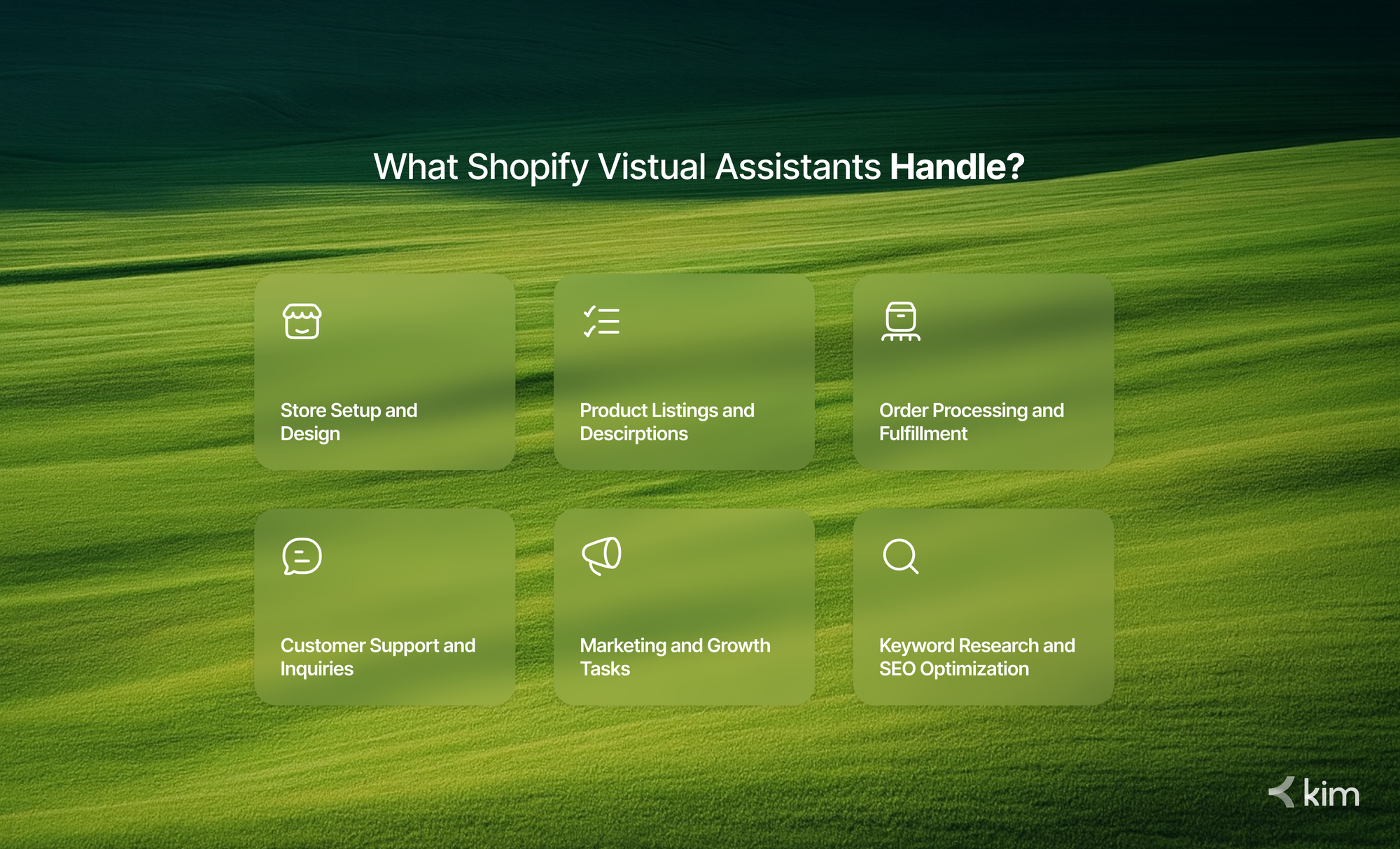
A Shopify VA can take on a wide range of operational and marketing tasks, freeing U.S. store owners to focus on strategy and growth.
Key responsibilities include:
- Product Management: Add new products, update descriptions, and optimize titles and images for SEO.
- Order Processing: Manage orders, coordinate with suppliers, and ensure timely fulfillment.
- Customer Support: Respond to emails, live chat, and social media inquiries efficiently.
- Inventory Management: Monitor stock levels and schedule restocks before items sell out.
- Marketing Assistance: Manage email campaigns, social posts, and promotional content.
Delegating these repetitive tasks not only saves time but also ensures consistent good customer service, boosting overall customer experience.
Pro Tip: If you run a Shopify store targeting U.S. customers, having a VA aligned with your time zone can improve response times and satisfaction.
How to Hire a Reliable Shopify VA
The right VA can transform your store’s efficiency. Here’s a step-by-step approach:
- Define Your Needs
List out the tasks you want to delegate, customer service, SEO, content creation, marketing, or order processing. - Create a Clear Job Description
Include skill requirements like Shopify admin, Canva, Klaviyo, or other customer care software tools. - Use Trusted Platforms
Upwork, Fiverr, OnlineJobs.ph, or U.S.-based agencies specializing in Shopify support are great options. Understanding whether an assistant is vetted or non-vetted can also influence quality and oversight requirements (vetted vs non-vetted virtual assistants for DTC customer support) - Interview Thoroughly
Assess communication skills, experience, and familiarity with Shopify tools and customer service software. - Start with a Trial
A 2–4 week trial period can reveal work quality, reliability, and communication style.
Tip: Some U.S. store owners prefer a hybrid team (U.S. + offshore) to provide 24/7 customer support remote coverage.
What Does a Shopify VA Cost?
Shopify VA pricing varies depending on experience, location, and the type of engagement.
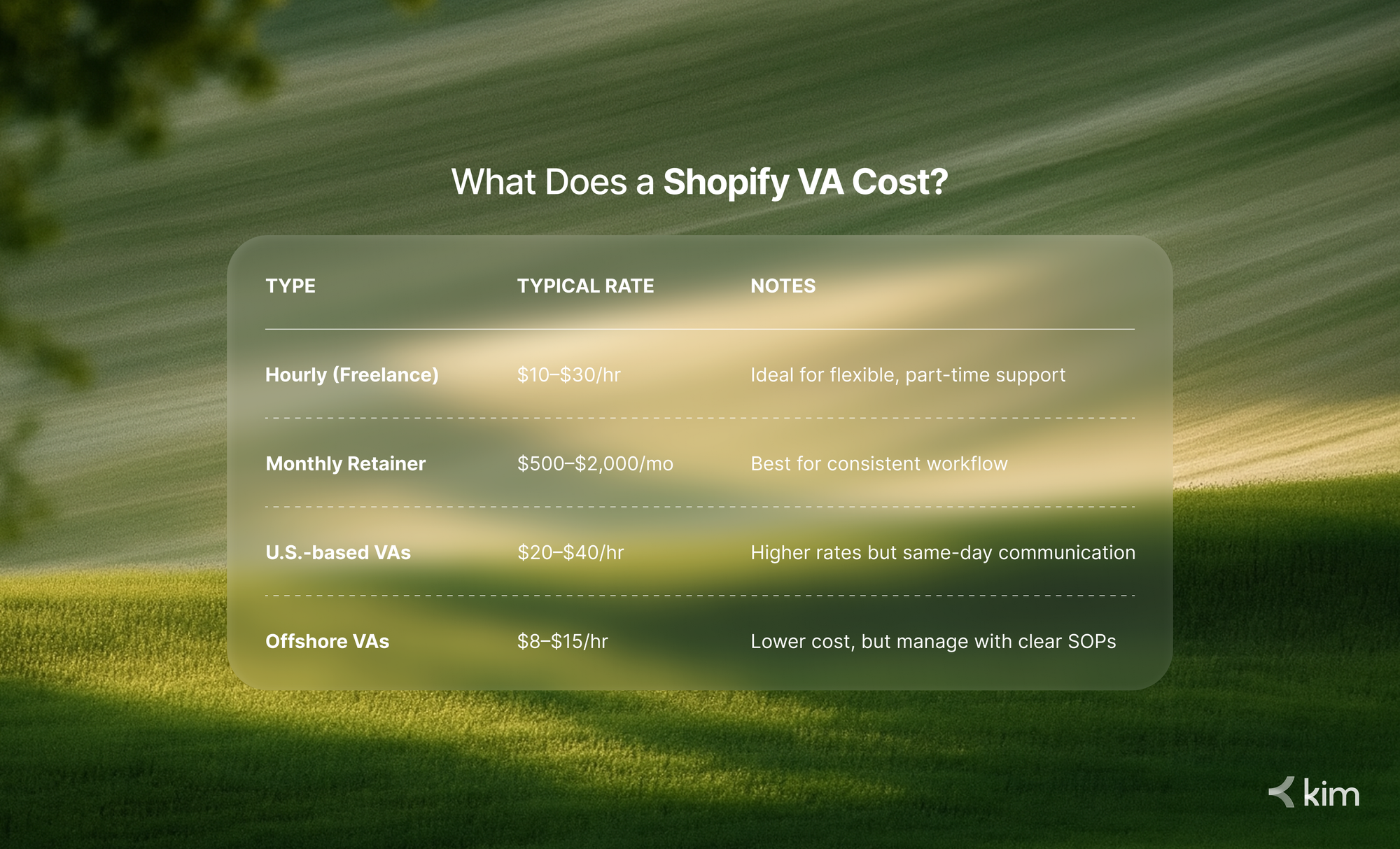
Balancing cost with quality is key, experienced VAs often deliver better ROI through faster turnaround and fewer errors.
Remember: Paying slightly more for a U.S.-aligned VA can improve customer service experience for your store.
Can a Shopify VA Help Scale My Business?
Absolutely. Once a VA handles day-to-day operations, you can focus on high-impact growth:
- Expanding Product Lines: Research new SKUs, suppliers, and competitors.
- Enhancing Marketing: Run promotions and automate campaigns in tools like Klaviyo or Mailchimp.
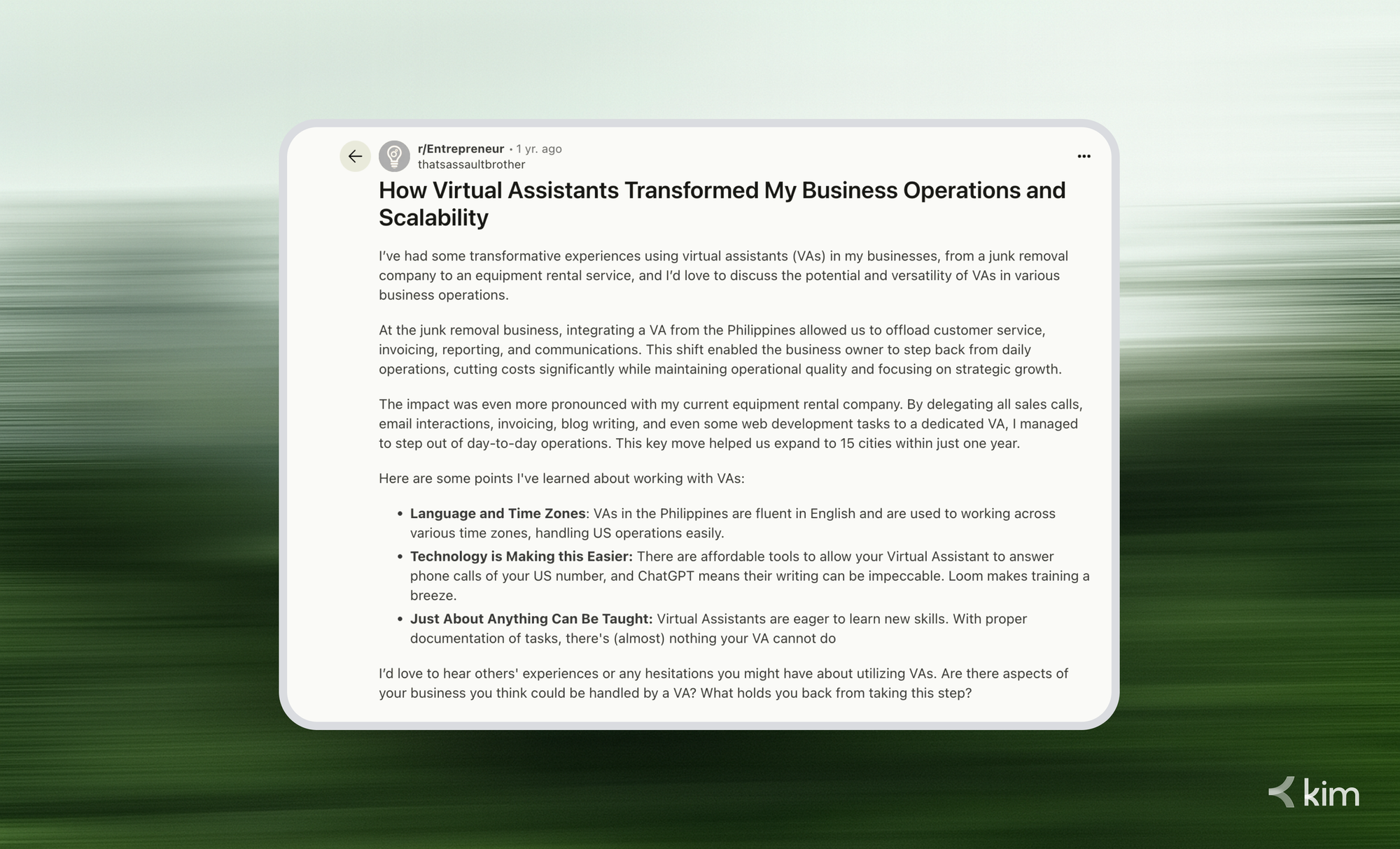
- Improving Customer Experience: Monitor reviews, implement feedback loops, and maintain consistent brand voice.
time they used to work “on” their business instead of “in” it.
Communicating Effectively With Your VA
Clear communication is critical for long-term success.
- Tools: Slack, Trello, Asana, or ClickUp help maintain visibility across tasks and timelines. Tracking performance is just as important as assigning work, which is why many store owners rely on dedicated tools to monitor productivity, response times, and accountability. If you’re setting this up for the first time, this guide on the top tools to track Shopify virtual assistants breaks down what actually works for growing e-commerce teams.
- Expectations: Define roles, response times, escalation paths, and KPIs early to avoid confusion later.
- Meetings: Weekly or bi-weekly video calls help align priorities and resolve blockers quickly.
- Documentation: Maintain SOPs in Google Docs or Notion so your VA always has a single source of truth.
Pro Tip: Align check-ins with U.S. working hours for smoother collaboration and faster responses in live chat support outsourcing.
Risks of Hiring a Shopify VA (and How to Avoid Them)
Outsourcing carries some risk, but it can be mitigated:
- Quality Control: Start small, review work frequently, and use checklists.
- Data Security: Limit Shopify permissions via staff accounts.
- Cultural Awareness: Bridge communication gaps through video calls and shared workspaces.
- Extra Safety: Sign NDAs and use tools like LastPass for password management.
Onboarding Your Shopify VA
Effective onboarding reduces errors and accelerates performance:
- Provide training materials, walkthroughs, or Loom videos.
- Set up Shopify staff access and permissions.
- Introduce your brand voice, tone, and customer policies.
- Schedule feedback loops for the first 30 days.
Proper onboarding ensures your VA can deliver best customer service consistently.
Improving Customer Service With a Shopify VA
Customer support is key to retention and best customer experience:
- Respond promptly to emails, live chat, and DMs.
- Process returns, refunds, and exchanges.
- Track feedback and escalate product issues.
- Maintain a consistent brand voice across channels.
Example: Allbirds, a U.S.-based Shopify brand, uses VAs for routine queries so their in-house team can focus on complex cases. Result? Higher satisfaction, repeat orders, and glowing reviews.
By leveraging AI virtual assistant tools or ai customer service software, VAs can also help automate FAQs and improve response time.
Conclusion & Next Steps
Hiring a Shopify Virtual Assistant isn’t just about saving time, it’s about building a scalable system.
For U.S.-based store owners, the right VA can turn daily chaos into smooth, profitable operations.
- Define your needs clearly.
- Hire smart, focusing on reliability and experience.
- Communicate consistently and provide proper onboarding.
With these steps, you can unlock the freedom to grow your Shopify business while maintaining good customer service and delivering the best customer experience.
FAQs
Q1: What tasks can a Shopify VA handle?
A Shopify VA manages product uploads, order processing, customer service, inventory control, marketing, and customer support remote tasks to help store owners scale efficiently.
Q2: How much does a Shopify VA cost?
Typically between $10–$30 per hour or $500–$2,000 per month. U.S.-based VAs cost $20–$40/hr, while offshore VAs range $8–$15/hr.
Q3: Can a Shopify VA help with SEO and marketing?
Yes! Many VAs are trained in SEO, email campaigns, social media, and content creation. They often use customer service software or ai customer service agents to improve workflow.
Q4: Can a Shopify VA improve my customer service experience?
Absolutely. They handle live chat, emails, and social media inquiries, ensuring faster responses and a consistent brand voice. Using ai-powered virtual assistants can further enhance efficiency.
Q5: Is it worth hiring a Shopify VA for a small store?
Even small stores benefit. Delegating repetitive tasks frees your time for growth strategies, improves customer satisfaction, and prevents burnout.