8 Common Mistakes to Avoid When Hiring a Virtual Assistant (VA)
Hiring a Virtual Assistant isn’t like hiring a traditional employee. They don’t sit in your office, absorb your company culture by default, or pick up processes through casual conversations. Success with a VA depends on how well you define their role, communicate, and set them up for success.
Yet many businesses still get it wrong. They rush into hiring, skip key steps, and end up frustrated rather than supported. Considering the VA market is projected to reach $25.6 billion by 2027 (Grand View Research), and nearly 60% of businesses use VAs for customer support tasks (Statista), avoiding mistakes is more important than ever.
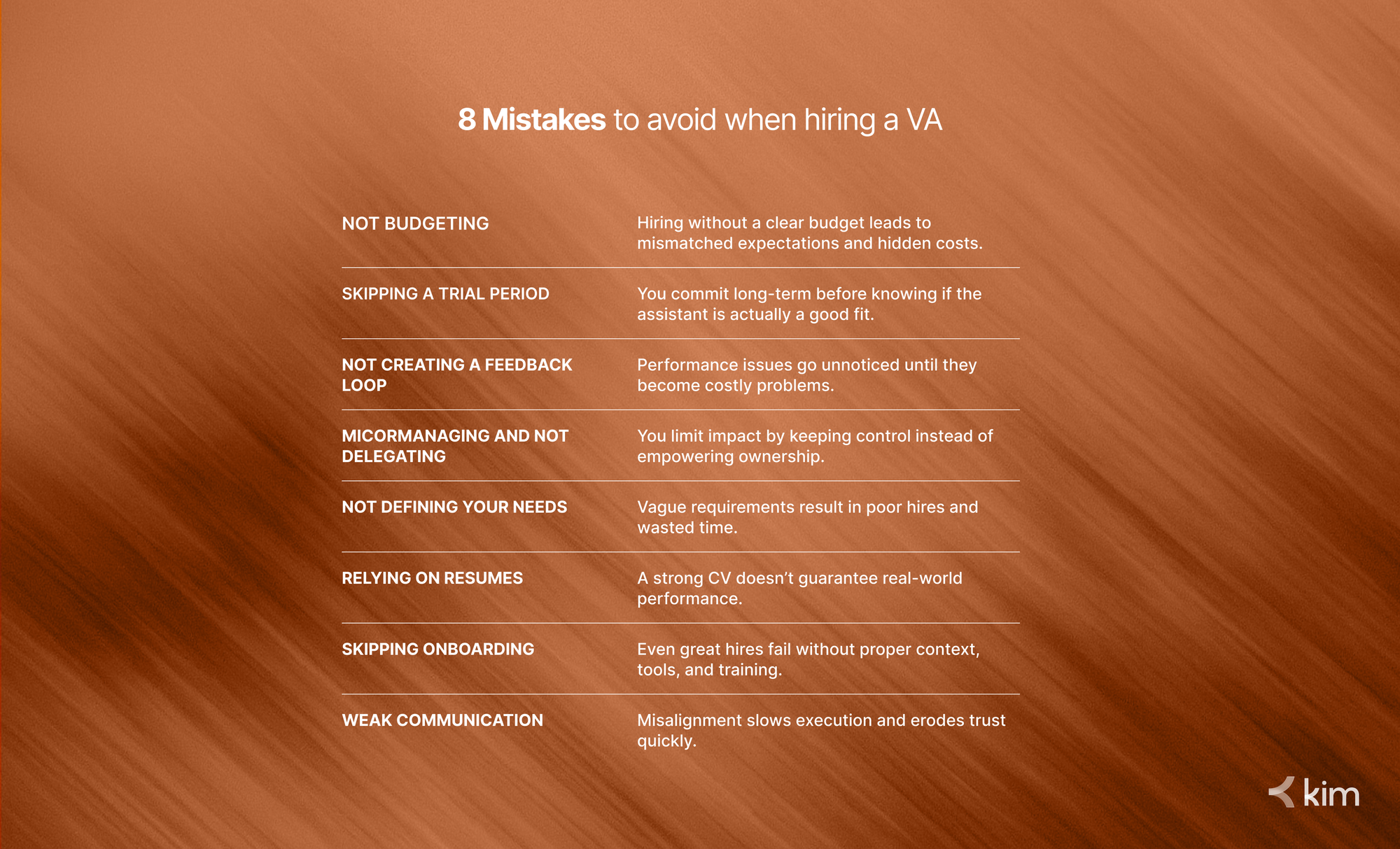
Here are eight common VA hiring mistakes, and how to hire a virtual assistant effectively from the start.
TL;DR
- Most virtual assistant hires fail due to unclear roles, weak onboarding, and poor communication.
- Defining tasks, testing skills, and setting clear expectations upfront prevents wasted time.
- Proper onboarding, feedback loops, and delegation turn VAs into long-term productivity partners.
- Trial periods help businesses assess fit and performance before committing.
- Hiring a VA the right way saves time, reduces operational stress, and improves customer support outcomes.
8 Common Virtual Assistant Hiring Mistakes
Mistake 1: Hiring a Virtual Assistant Without Defining Your Needs
A common error is hiring out of overwhelm. Founders often hear peers rave about VAs and rush to onboard one, without clarifying what support they actually need. The result? Misaligned expectations and wasted time.
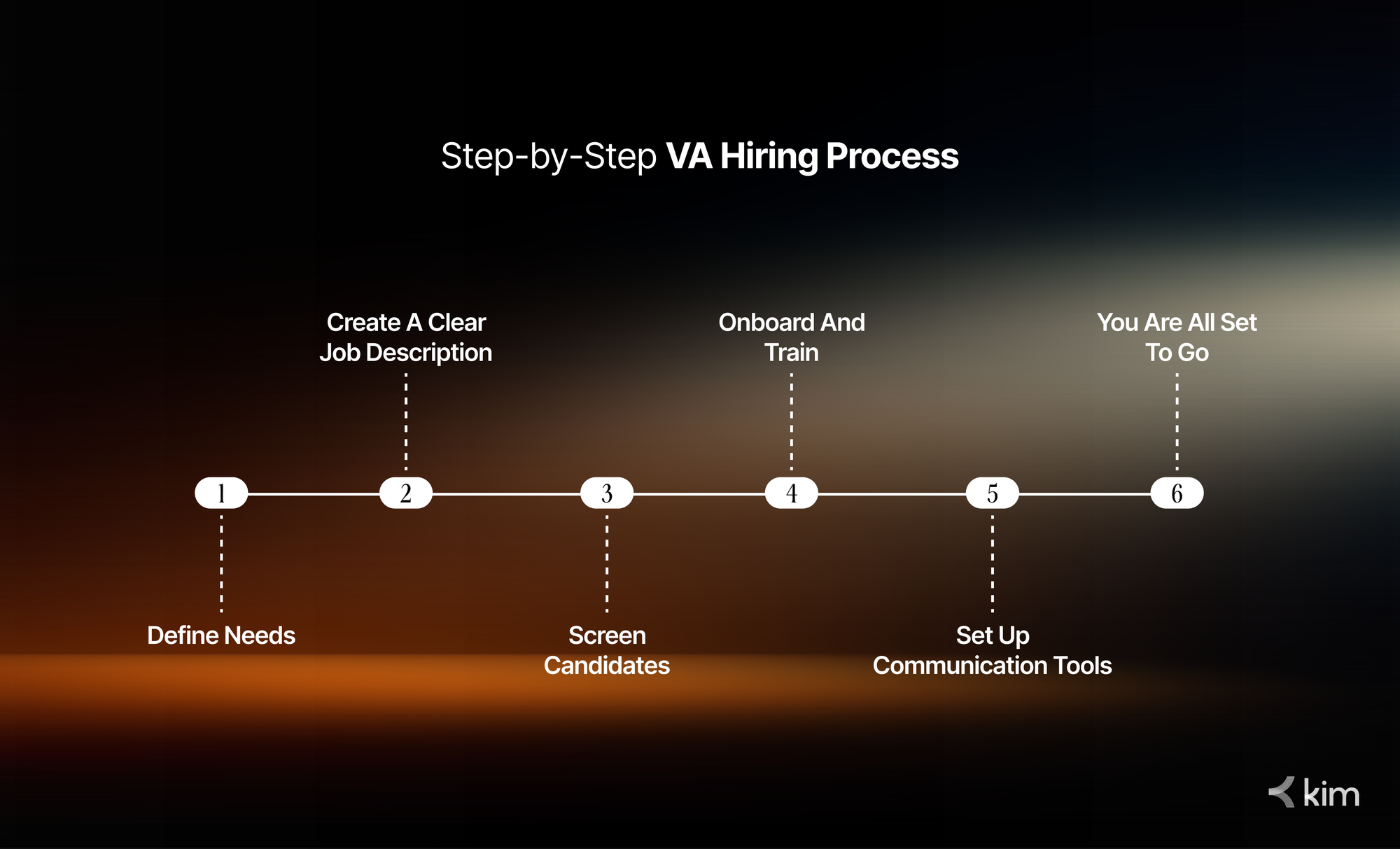
Before hiring, ask:
- Which tasks consume most of my time, customer service, admin, or marketing?
- Do I need a generalist VA or a specialist with niche skills?
- What qualifications are essential versus “nice to have”?
Clear role definitions and outcomes prevent confusion later. Mapping this out ensures your VA adds value from day one.
Mistake 2: Relying Only on Resumes (and Hiring the First Candidate)
Resumes don’t reveal how a VA communicates, handles pressure, or solves problems. Too many founders hire the first candidate who looks good on paper, only to regret it weeks later.
Instead, take a structured approach:
- Shortlist multiple candidates.
- Test skills with real-world tasks (like drafting a customer email or organizing data).
- Pay close attention to communication style, it will define your working relationship.
If customer-facing skills are part of the role, make sure you screen for them. Here’s a useful guide on the top 8 customer support skills to look for before you hire.
Mistake 3: Skipping Proper Onboarding
Hiring a VA doesn’t mean instant productivity. Without onboarding, even the most skilled assistants will struggle.
Strong onboarding includes:
- Sharing SOPs (Standard Operating Procedures).
- Providing access to tools and logins upfront.
- Running short training sessions to explain workflows.
- Setting measurable KPIs so progress is trackable.
Think of onboarding as an investment, it pays off through smoother execution later.
Mistake 4: Weak Communication Setup
The biggest breakdown in VA relationships is poor communication. Unlike in-house employees, VAs don’t have casual office interactions to rely on.
To avoid gaps:
- Choose primary communication channels (Slack, email, WhatsApp).
- Set expectations for response times.
- Use project management tools like Trello, Asana, or ClickUp.
- Hold regular check-ins, weekly at minimum in the first months.
Strong communication systems prevent errors and save both sides frustration.
Mistake 5: Micromanaging Instead of Delegating
One of the main reasons to hire a virtual assistant is to free up time. But many founders sabotage this by micromanaging every small task.
A better way:
- Identify repeatable tasks and fully hand them over.
- Provide instructions once, then trust your VA to execute.
- Use documented processes so tasks don’t need constant oversight.
Micromanagement erases the very time and efficiency you’re trying to gain.
Mistake 6: Not Creating a Feedback Loop
Even experienced VAs can’t guess your preferences. Without feedback, mistakes repeat.
The best feedback system is simple:
- Start with what’s working.
- Give clear, actionable suggestions for improvement.
- End on encouragement to build motivation.
This creates a positive cycle, better performance, stronger trust, and fewer repeated errors.
Mistake 7: Skipping a Trial Period
Hiring a VA full-time without testing fit is risky. Skills, communication, and compatibility all matter, and they don’t always show up in an interview.
That’s why trial periods are critical. With SupportHire, brands can run a 15-day no-cost trial to evaluate real performance before committing. It removes guesswork and ensures you hire with confidence.
Mistake 8: Not Budgeting Properly
Some businesses treat hiring a VA as cheap labor; others overspend without planning. Both approaches fail.
A good budget should account for:
- VA rates (hourly or monthly, depending on skill and region).
- Tools and software access.
- Training and onboarding costs.
Budgeting upfront ensures you can attract quality talent and sustain the partnership long term.
Where to Hire a Virtual Assistant the Smart Way
Generic freelance marketplaces may work for short-term projects, but if you want scalable, reliable, and customer support–ready VAs, you need a partner who understands your industry.
That’s where brands like kim.cc stands out:
- 24/7 AI + human hybrid support.
- Free 15-day trial to test fit.
- No lock-in or long-term commitment.
- Tailored for eCommerce and customer support workflows.
Hiring isn’t just about filling a role, it’s about finding the right support system for your business.
Frequently Asked Questions (FAQs)
1) What tasks can a virtual assistant handle?
Virtual assistants commonly support customer service, administrative work, order management, inbox handling, and basic marketing tasks. The exact scope depends on whether you hire a generalist or a specialist VA.
2) How long does it take to onboard a virtual assistant?
Onboarding typically takes one to two weeks, depending on task complexity and documentation. Clear SOPs, tool access, and early feedback can significantly shorten this timeline.
3) Should I start with a trial period when hiring a VA?
Yes. A trial period allows you to evaluate real-world performance, communication style, and reliability before committing long-term, reducing hiring risk.
4) What is the biggest mistake businesses make when hiring a VA?
The most common mistake is hiring without clearly defining needs and expectations. This often leads to misalignment, repeated errors, and frustration on both sides.
5) Are virtual assistants cost-effective for customer support?
When hired and managed correctly, virtual assistants are highly cost-effective. They help businesses scale support operations without the overhead of full in-house teams.
Final Thoughts: Hire Smart, Scale Faster
Hiring a Virtual Assistant isn’t about ticking a box, it’s about creating leverage. By avoiding these common VA hiring mistakes, you turn a VA into a strategic extension of your team.
Instead of drowning in repetitive tasks and missed support tickets, take the smarter route: define your needs, set up proper systems, and test before you commit. With the right VA in place, you’ll not only save time, you’ll scale faster and deliver better customer experiences.
Test Before You Commit
Hiring a VA doesn’t have to feel like a gamble. With kim.cc, businesses can test a virtual assistant through a 15-day free trial, no lock-in, no upfront risk.